Blog

Understanding Frost Cracks in Trees: Causes, Prevention, and Care

Trees are remarkable organisms—flexible yet strong, rooted yet reaching toward the sky. But even these enduring giants are vulnerable to environmental stressors. One such issue that tree owners and arborists frequently encounter is frost cracking. While it may seem like a superficial wound on the bark, frost cracks are more than just cosmetic; they can compromise a tree’s health and structural integrity if left unaddressed. In this blog post, we’ll explore what frost cracks are, how they form, which tree species are most susceptible, and how you can prevent or treat these injuries.


What Are Frost Cracks?

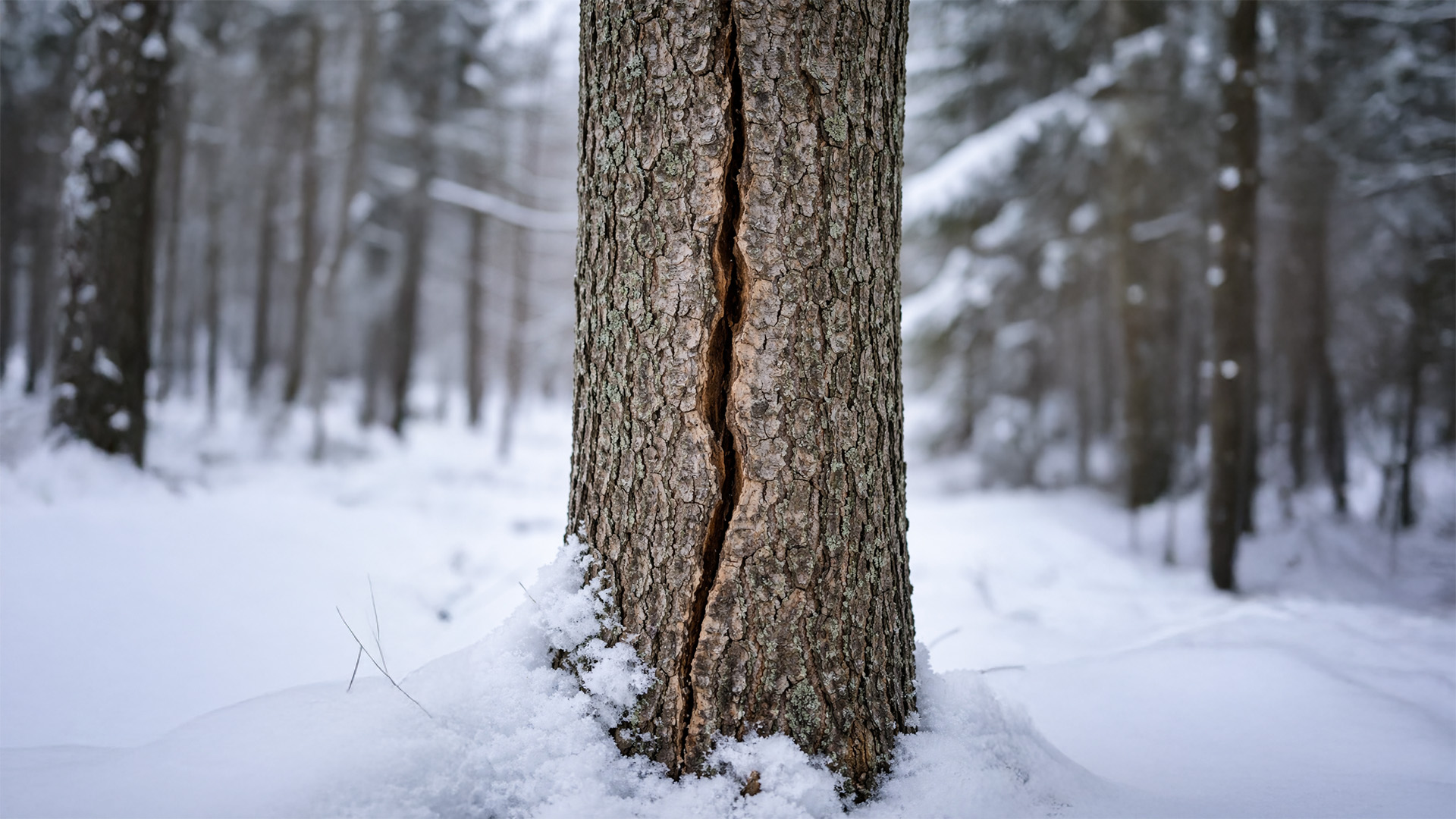
Frost cracks are long, vertical splits in the bark of a tree’s trunk or limbs. Typically, these splits run along the south or southwest side of the tree, where sunlight is limited in winter. Unlike wounds caused by animals or machinery, frost cracks are the result of rapid temperature fluctuation. They are most visible in late winter or early spring, when snow or ice begins to melt and stress from temperature changes accumulates.


While frost cracks may appear dramatic, in many cases they are superficial and don’t penetrate deeply into the wood. However, repeated cracking or deep fissures can expose the inner wood to pests, decay, and disease, which can cause long-term harm.


How Frost Cracks Form

Temperature Fluctuations and Differential Expansion

The primary cause of frost cracks is rapid temperature changes, especially in winter. Trees lose heat quickly after sunset. On sunny winter days, one side of a tree—often the south or west side—can warm considerably. When the sun sets and temperatures plummet, the warm surface cools off rapidly.


Different parts of a tree trunk heat and cool at different rates. The outer bark reacts quickly to temperature changes, while the inner wood remains cooler for longer. This difference in heating and cooling rates causes differential expansion and contraction—the outer bark contracts more rapidly than the inner wood, creating internal stress.


When the stress exceeds the bark’s strength, it cracks—much like how freezing water expands and cracks pavement. These vertical splits are generally called frost cracks.


Other Contributing Factors

Several other conditions can make frost cracking more likely:

  • Low humidity: Dry winter air causes rapid moisture loss from bark, making it more brittle and susceptible to cracking.
  • Thin bark species: Trees with thinner bark are less insulated from temperature swings, increasing the risk of frost cracks.
  • Prior injuries: Trees with wounds from pruning, animal damage, or mechanical injury are weaker and more prone to cracking.
  • Snow and ice accumulation: Ice can weigh down branches or trap moisture against the bark, creating localized stress and contributing to cracks.

What Tree Species Are Most Susceptible?

Some tree species are more prone to frost cracking because of their bark characteristics or natural growth patterns. Here are a few that commonly experience frost cracks:


Susceptible Species

  • Maple Trees (e.g., Acer saccharinum – Silver Maple): These trees have relatively thin bark and are especially prone to cracking in cold climates.
  • Ash Trees (Fraxinus spp.): Ash bark tends to be thinner and can be more vulnerable to rapid temperature swings.
  • Birch Trees (Betula spp.): Known for their striking but thin bark, birches are especially sensitive to thermal stress.
  • Young Fruit Trees (e.g., apple, cherry): Juvenile trees often have more delicate bark, making them more vulnerable than mature specimens.
  • Beech Trees (Fagus spp.): While beech bark is smooth and attractive, it can be susceptible to frost damage.


Less Susceptible Species

Some trees are more resistant due to thicker bark or natural adaptations:

  • Oak Trees (Quercus spp.): Thick, rugged bark helps insulate the wood from rapid temperature shifts.
  • Pine Trees (Pinus spp.): The combination of bark texture and resin content can reduce frost cracking.
  • Cedar and Other Evergreens: The bark and overall structure of evergreen conifers help buffer temperature changes.

Prevention: Protecting Trees from Frost Cracks\

Although frost cracks are largely caused by natural weather patterns, there are ways you can help protect your trees—especially young, valuable, or vulnerable species.


1. Wrap the Trunk in Winter

One of the most effective preventive measures is to wrap the trunk with a tree wrap or protective covering during the winter. These wraps provide insulation and help regulate temperature changes on the bark.

  • Best Time to Wrap: Late fall, before winter temperature swings begin
  • Materials: Burlap, commercial tree wraps, or even white plastic tree guards
  • Remove in Spring: Once the risk of frost fluctuating temperatures subsides, remove the wrap to prevent moisture build-up and pests.


2. Choose Proper Planting Locations

When planting new trees:

  • Avoid placing sensitive species in exposed, open areas without windbreaks.
  • If possible, plant near structures or other trees that can offer some protection from wind and rapid temperature changes.


3. Apply White Paint for Sunscald Protection

Sunscald is a related problem where bark heats up in the sun and then freezes quickly after sunset. Painting the south and west side of the trunk with latex white paint (diluted with water) can reflect sunlight and reduce heat absorption. This method is commonly used for young fruit trees.

  • Ratio: 1 part water to 1 part white latex paint
  • Application: Late fall through early spring


4. Maintain Adequate Watering and Mulching

Healthy trees are more resilient. Proper watering (especially in fall before the ground freezes) and mulching can help trees withstand the stress of winter. Mulch conserves moisture and helps stabilize soil temperatures.


5. Avoid Mechanical Injury

Do not damage the bark with lawnmowers, weed trimmers, or other tools. Openings or wounds in the bark weaken the tree’s defense and make frost cracks more likely.

Remedy and Care for Frost Cracks

Even with the best precautions, frost cracks can still occur. If you notice a crack, here’s what you can do to help the tree heal:


1. Assess the Severity

  • Superficial Cracks: These affect only the bark and outer tissues and often heal on their own.
  • Deep Cracks: Penetrate the cambium (the layer responsible for nutrient transport) or more deeply into the wood. These may require professional assessment.


2. Clean the Wound

Using clean pruning tools, gently remove jagged bark around the crack to reduce rough edges. This helps the tree compartmentalize the wound.


Important: Do not use wound paints or sealants. While once recommended, research shows they do not aid healing and can trap moisture, leading to decay.


3. Encourage Natural Healing

Trees heal by compartmentalizing damage—forming new wood and bark over the wound. You can help this process by ensuring the tree is healthy:

  • Watering: Keep the soil consistently moist (but not waterlogged).
  • Fertilizing: Apply balanced fertilizer in spring to support growth.
  • Mulching: A 2–4 inch layer around the base helps retain moisture and moderate soil temperature.


4. Consult an Arborist for Large Cracks

If a crack is especially deep, wide, or affects the structural integrity of the tree, consult a certified arborist. They can assess:

  • Whether cabling or bracing is needed to support structural stability
  • If decay is present and should be treated
  • Whether the tree is safe to keep or should be removed

Final Thoughts

Frost cracks are a common winter concern but with some awareness and preventative care, tree owners can significantly reduce their impact. Recognizing which species are more vulnerable allows you to take steps early—whether that’s protective wraps, strategic planting, or timely maintenance.


Trees are resilient organisms. A bit of care and understanding of their needs—especially in harsh winter climates—can go a long way in keeping them healthy season after season.


If you’re noticing cracks in your trees and aren’t sure what to do, feel free to ask for guidance. I’d be glad to help you assess what you’re seeing and recommend next steps.