How to Repair Winter Damage in Spring
Step 1 — Clean Up First
- Rake matted areas lightly to remove debris and dead grass. Be gentle — dormant grass can still be fragile.
- Remove thatch if thick (>1/2 inch). A dethatching rake or power dethatcher clears space for new growth.
Step 2 — Core Aeration (Highly Recommended)
Aeration helps reduce compaction from freeze–thaw cycles and allows air, water, and nutrients to reach roots. Rent a core aerator from a local garden center or hire a pro.
This is especially important if your lawn sees heavy winter traffic, pets, or saturated soils.
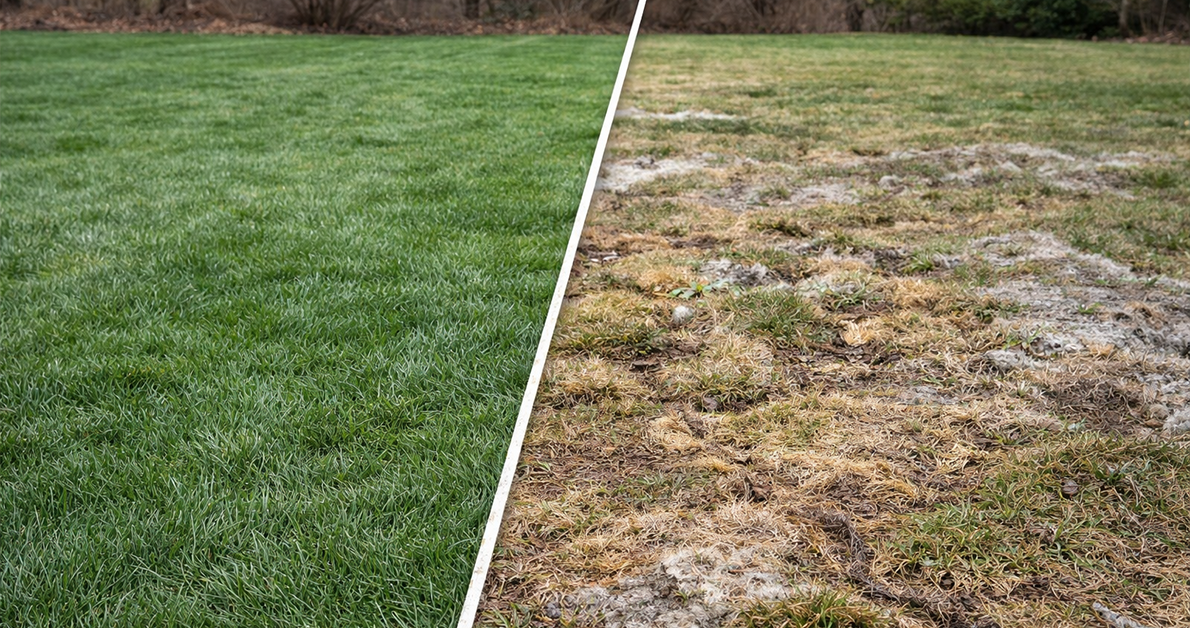
Step 3 — Repair Bare or Thin Spots
For small patches:
- Loosen the topsoil in the bare spot with a rake.
- Spread a thin layer of high-quality topsoil or compost.
- Reseed with a cold-tolerant grass seed mix appropriate for Michigan lawns (typically a mix of Kentucky bluegrass, perennial ryegrass, and fine fescue).
- Lightly firm the seedbed and keep moist until seedlings are established.
For larger areas:
- Consider sodding if quick cover and aesthetics matter.
- If the area is very large, you may want to overseed the entire lawn so new grass blends smoothly with old.
Recommended seed rate:
- Follow package recommendations, but generally 4–6 lbs/1,000 sq ft for overseeding and higher for full renovation.
Step 4 — Fertilize Appropriately
After seeding/sodding:
- Use a starter fertilizer that’s gentle and high in phosphorus (for root development) if your soil test supports it.
- Avoid high nitrogen too early — excessive green growth before roots are strong can stress seedlings.
Step 5 — Control Snow Mold Recurrence
Snow mold won’t usually persist once conditions warm, but you can reduce risk next winter by:
- Raking up fallen leaves and debris in late fall so snow sits on healthy grass instead of dead plant material.
- Avoiding late fall fertilization — excessive late fertilizing delays dormancy and encourages snow mold.
- Reducing thatch so moisture doesn’t accumulate near crowns.
- Mowing until grass stops growing in fall. Cutting too short in October can increase winter stress; too long increases mold risk.
If snow mold was severe, you can use a fungicide in late fall (only if problems recur year after year). Consult lawn care pros for appropriate products and timing.