Blog

Apple Scab on Crabapples in Southeast Michigan: A Homeowner’s Guide

If you’re a gardener or homeowner in Southeast Michigan with crabapple trees, you’ve likely seen the tell-tale dark spots on leaves and fruit that signal apple scab — one of the most common and frustrating diseases affecting Malus species (apple and crabapple trees). While it’s seldom fatal, apple scab can be unsightly and lead to early leaf drop, weakened trees, reduced blooms, and diminished fruit quality in crabapples used for ornamental or edible purposes. Understanding what apple scab is, how it spreads, and how to manage it can help you keep your trees healthy and attractive. (The Morton Arboretum)


What Is Apple Scab?

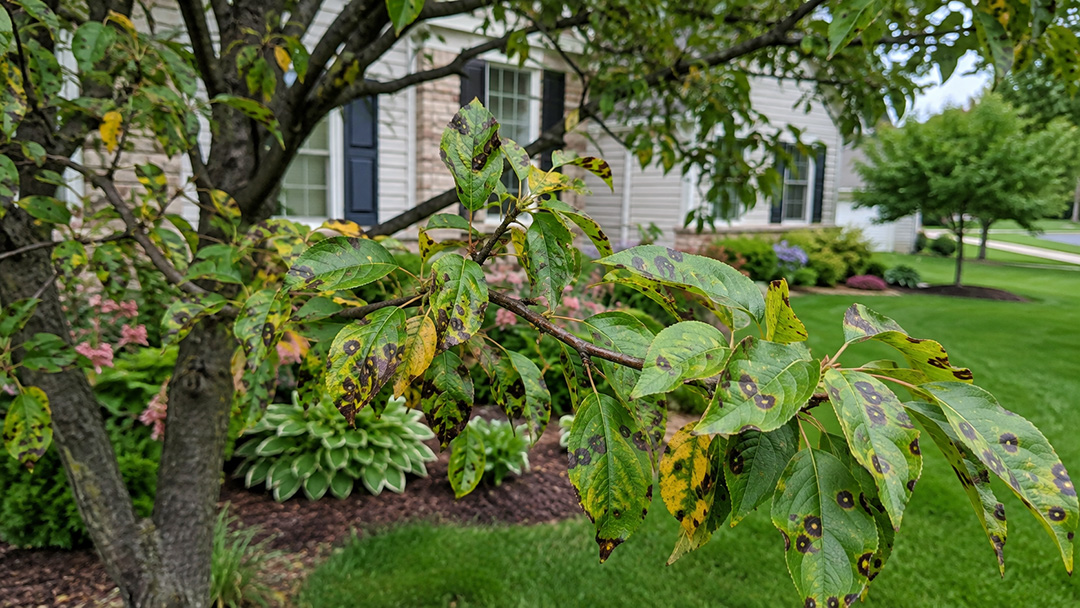
Apple scab is a fungal disease caused by the pathogen Venturia inaequalis (sometimes spelled inequalis), a fungus that thrives in cool, wet conditions — exactly the kind of springs we often experience in Southeast Michigan. While it affects apples too, crabapples are particularly noticeable because their leaves and fruit develop distinctive dark, velvety, olive-to-brown lesions. (The Morton Arboretum)


Symptoms typically include:

  • Leaf spots — small, dark, olive green to brown velvety spots that may grow larger and fuse together.
  • Deformed foliage — leaves may curl, distort, and eventually turn yellow and drop early.
  • Fruit scabbing — fruit develops corky, scabby patches that can crack or drop prematurely.
  • Repeated infections year after year can stress trees and make them less vigorous. (Ag & Natural Resources College)


Although it rarely kills trees outright, repeated severe infections can weaken them, making them more susceptible to other stresses. (Chicago Botanic Garden)


How Apple Scab Is Transmitted

The life cycle of apple scab explains why it’s so persistent in our climate:

  • Overwintering – The fungus survives Michigan winters in infected leaves on the ground. Tiny fruiting bodies called pseudothecia form on these leaves. (Ag & Natural Resources College)
  • Primary infection in spring – When buds start to open in spring (around green tip), ascospores — sexual spores produced in these overwintering leaf structures — are released during wet conditions and carried by wind or splashing rain to new leaves and blossoms. (Ag & Natural Resources College)
  • Secondary spread – Once leaves are infected, the fungus produces asexual spores (conidia), which spread further through wind and rain splash throughout spring and summer, creating more lesions and encouraging defoliation. (Ag & Natural Resources College)


Warm, wet springs — common here — are ideal for spore release and infection, so managing leaf wetness and moisture is crucial in reducing disease. (The Morton Arboretum)


Managing and Treating Apple Scab

Managing apple scab is a multi-pronged effort. No single step will completely eliminate the disease, but a combination of practices can greatly reduce its impact.


Cultural Controls – Start with Sanitation

Because the fungus survives in fallen leaves, cleaning up leaf litter in fall and winter is one of the most effective and affordable practices:

  • Rake and remove fallen leaves beneath trees each autumn before winter sets in. Leaving them to decompose in place allows the fungus to restart its cycle next spring. (The Morton Arboretum)
  • Compost fallen leaves only if your pile gets hot enough (160°F+) to kill fungal spores; otherwise, disposal outside the garden is safer. (University of Minnesota Extension)
  • Prune trees in late winter to open the canopy and allow air movement, helping foliage dry faster after dew or rain — a key factor in reducing infections. (University of Minnesota Extension)


These practices don’t cost much but significantly reduce “inoculum” — the amount of fungus available to infect in the spring. (Wisconsin Horticulture)


Resistant Cultivars

When planting new crabapple trees, choose scab-resistant varieties. Many modern crabapples have been bred to withstand apple scab and show only light spotting, if any.


Some resistant varieties recommended for climates like ours include:

  • ‘Prairifire’
  • ‘Sugar Tyme’
  • ‘Professor Sprenger’
  • ‘Sargent’ / ‘Sargent Tina’
  • ‘White Cascade’
  • ‘Cardinal’
  • ‘Royal Raindrops’


Resistant varieties still benefit from good cultural care, but they dramatically reduce the frequency and severity of scab outbreaks. (Michigan Gardener)


Fungicide Treatments

Chemical control is most effective when used preventively, before symptoms appear:

  • Start applications as soon as leaves begin to emerge in spring (often at green tip or bud break). (Ag & Natural Resources College)
  • Repeat sprays at recommended intervals (often every 7–14 days) through petal fall and early summer, especially during rainy periods. (Ag & Natural Resources College)
  • Fungicides with active ingredients like captan, myclobutanil, propiconazole, chlorothalonil, or sulfur are common options (always follow label directions). (University of Minnesota Extension)


Note that fungicides do not cure existing lesions; instead they protect uninfected foliage from becoming diseased. Once scab is visible, the fungus is already established. (University of Minnesota Extension)

Putting It All Together

Apple scab is a chronic issue for crabapple trees in moist, temperate regions like Southeast Michigan. While it’s not usually deadly, it can be unsightly, weaken trees over time, and detract from spring blossoms and summer foliage. By combining good sanitation (leaf removal), planting resistant varieties, proper watering and pruning, and timely fungicide applications when needed, you can significantly reduce its impact and keep your crabapples looking their best year after year. (Wisconsin Horticulture)


If you’re ever unsure about a treatment or your tree’s health, contacting your local extension service or a certified arborist can provide tailored advice for your situation.