Blog

Why Deadheading Annual Flowers Is Essential for a Healthy, Beautiful Landscape

Nothing adds color and curb appeal to a landscape quite like vibrant annual flowers. Whether they're planted in landscape beds, window boxes, hanging baskets, or decorative containers, annuals provide continuous blooms throughout the growing season. However, keeping them looking their best requires regular maintenance—and one of the most important tasks is deadheading.


Deadheading is the simple process of removing faded or spent flowers before they go to seed. While it may seem like a small chore, it has a significant impact on the health, appearance, and longevity of your landscape.


If you want fuller plants, more blooms, and a cleaner-looking garden, here's why deadheading annual flowers should be part of your regular landscape maintenance routine.


What Is Deadheading?

Deadheading is the practice of removing flowers after they've faded or begun to die.


Once a flower has completed its bloom cycle, the plant naturally shifts its energy toward producing seeds. By removing the spent bloom before seeds develop, you encourage the plant to redirect that energy into producing new flowers instead.


The result is a healthier, more productive plant that continues blooming throughout the season.


Encourages More Flowers

The biggest benefit of deadheading is increased flowering.


Most annual flowers are programmed to produce seeds after blooming. Once seed production begins, many plants reduce or even stop producing new flowers.


Regular deadheading interrupts this process and encourages the plant to continue blooming.


Many popular annuals will reward consistent deadheading with weeks—or even months—of additional color.


Keeps Your Landscape Looking Neat

Even healthy flowers eventually fade.


Brown petals, dried blooms, and seed heads can make otherwise beautiful landscape beds appear neglected.


Removing spent flowers instantly improves the appearance of:

  • Flower beds
  • Borders
  • Decorative containers
  • Hanging baskets
  • Entryway planters


Regular deadheading gives your landscape a clean, professionally maintained appearance throughout the growing season.


Promotes Healthier Plants

Deadheading isn't just about appearance—it also contributes to plant health.


Removing dying blooms improves air circulation around the plant and reduces areas where moisture can collect.


This may help decrease the likelihood of certain fungal diseases, particularly during warm, humid summer weather.


Healthier plants are also better equipped to produce new foliage and flowers throughout the season.


Extends the Blooming Season

One of the greatest advantages of planting annual flowers is their long flowering period.


With proper maintenance, many annuals bloom continuously from late spring until the first fall frost.


Without deadheading, some plants finish their life cycle much earlier because they've successfully produced seed.


Routine maintenance helps maximize the value of your seasonal flower investment by keeping color in your landscape for as long as possible.


Which Annual Flowers Benefit Most from Deadheading?

Although some modern flower varieties are self-cleaning, many popular annuals bloom much more heavily when spent flowers are removed.


Flowers that often benefit include:

  • Petunias
  • Marigolds
  • Geraniums
  • Zinnias
  • Cosmos
  • Snapdragons
  • Salvia
  • Verbena
  • Dianthus
  • Sweet alyssum


These plants typically respond with fresh blooms when deadheaded consistently throughout the summer.


How to Deadhead Annual Flowers

Deadheading is easy and requires only a few minutes every week.


Follow these simple steps:

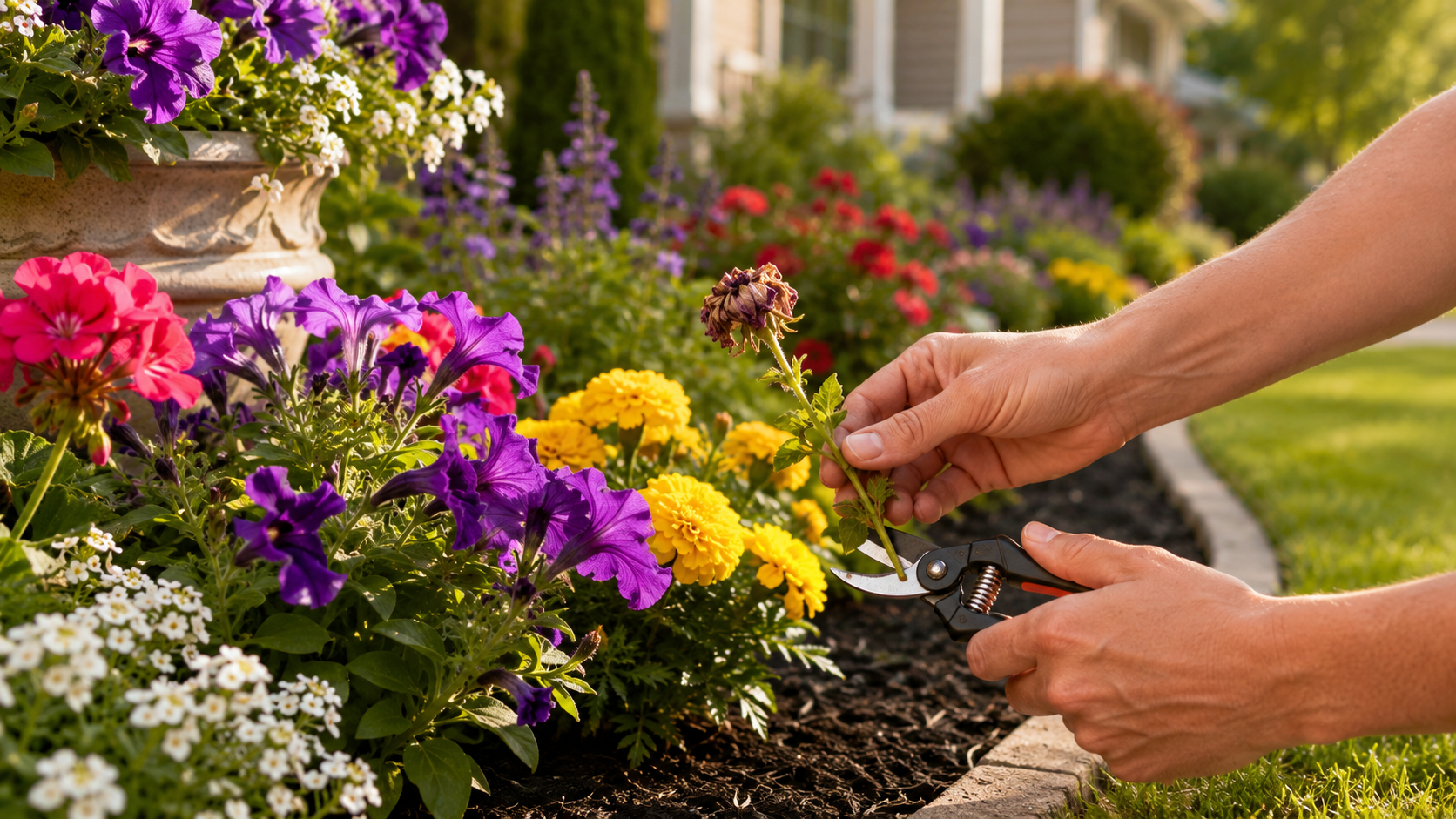
  1. Locate faded or dying flowers.
  2. Follow the flower stem down to the first healthy leaves or side shoot.
  3. Pinch or cut the stem just above that point.
  4. Remove any yellowing or damaged foliage while you're working.


Using clean hand pruners or garden scissors helps make clean cuts and minimizes stress on the plant.


How Often Should You Deadhead?

Most annual flower beds benefit from deadheading every one to two weeks during the growing season.


Fast-growing plants like petunias may need attention more frequently, especially during peak summer blooming.


By making deadheading part of your regular landscape maintenance schedule, you can prevent large numbers of faded blooms from accumulating.


Can You Skip Deadheading?

Some newer annual varieties are bred to be "self-cleaning," meaning spent flowers naturally drop off without significantly reducing future blooms.


However, even these varieties often benefit from occasional trimming to remove damaged stems, encourage fuller growth, and maintain a tidy appearance.


For traditional annual flowers, deadheading remains one of the easiest and most effective ways to improve performance.


Frequently Asked Questions

What does deadheading mean?

Deadheading is the process of removing faded flowers before they produce seeds. This encourages many annual plants to continue producing new blooms throughout the growing season.


Does deadheading really produce more flowers?

Yes. Removing spent blooms signals many annual plants to redirect their energy toward producing additional flowers instead of developing seeds.


How often should annual flowers be deadheaded?

Most annuals benefit from deadheading every one to two weeks, although fast-growing varieties may require more frequent attention during peak blooming periods.


What happens if I don't deadhead my flowers?

Without deadheading, many annuals begin producing seeds, which can reduce flowering and cause plants to appear less attractive as faded blooms accumulate.


Do all annual flowers need deadheading?

Not all annuals require it. Some newer hybrid varieties are self-cleaning, but many traditional annual flowers bloom more heavily and maintain a tidier appearance with regular deadheading.

Final Thoughts

Deadheading may seem like a small gardening task, but it delivers impressive results. By removing spent blooms on a regular basis, you encourage continuous flowering, improve plant health, extend the blooming season, and keep your landscape looking fresh and well maintained.


Whether you maintain your own flower beds or hire a professional landscaping company, making deadheading part of your routine can significantly enhance the beauty of your outdoor spaces. Just a few minutes of maintenance each week can reward you with vibrant color and healthier annual flowers from spring through the first frost.