Blog
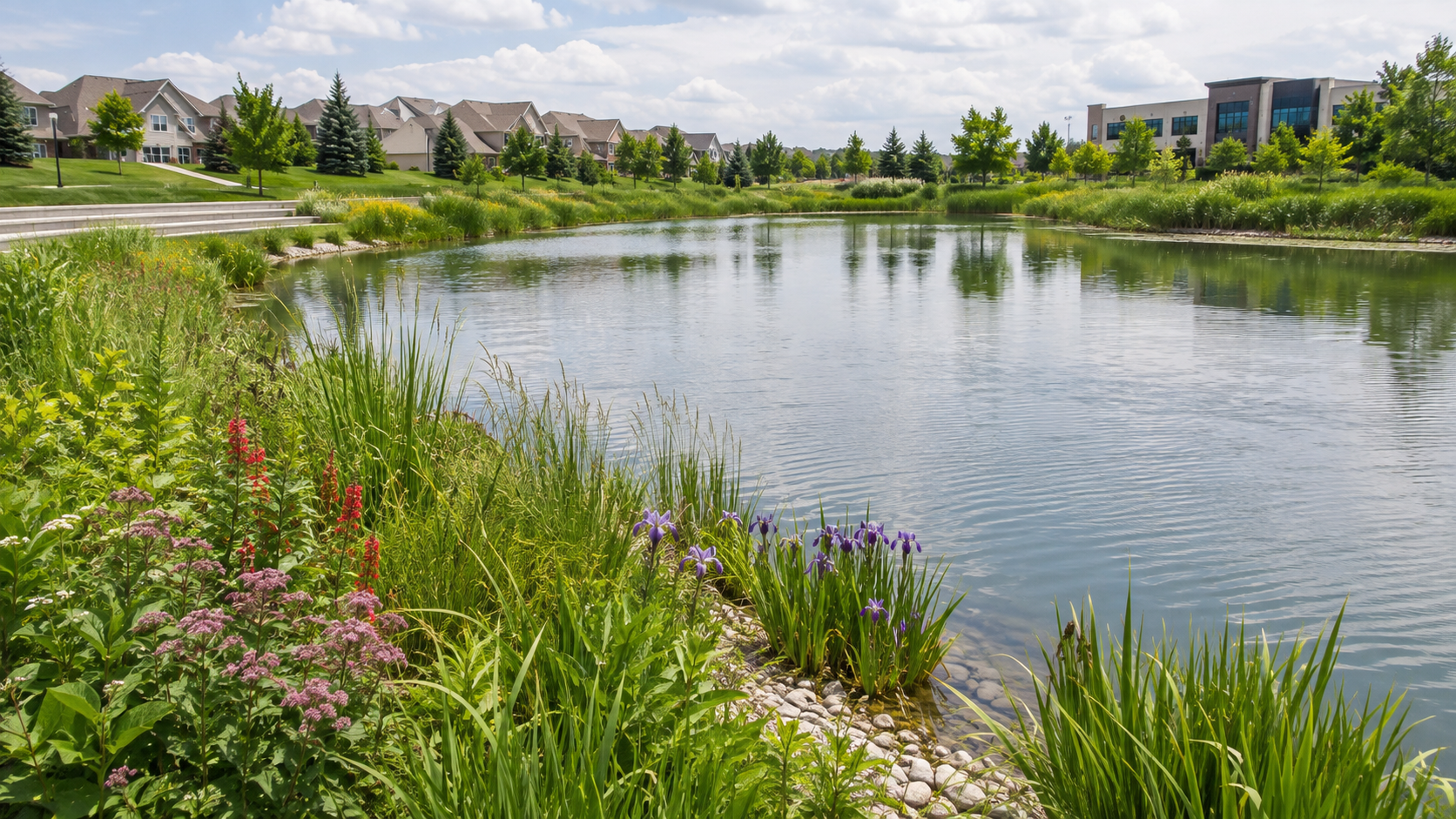
Retention ponds have become a common feature throughout Southeast Michigan's residential neighborhoods, commercial developments, business parks, and municipal properties. While many people view these ponds as simple landscape features, they actually serve an important purpose in managing stormwater runoff, reducing flooding, and protecting nearby lakes, rivers, and wetlands.
However, a retention pond is only as effective as the vegetation surrounding it. Bare shorelines, mowed turf grass, and invasive plant species can reduce a pond's ability to filter pollutants, prevent erosion, and support healthy ecosystems. That's why more municipalities, engineers, landscapers, and environmental professionals are recommending native wetland plants as an essential component of retention pond design and maintenance.
Native wetland plants not only improve the appearance of retention ponds, but they also provide significant environmental benefits that help protect water quality and reduce long-term maintenance costs. Whether you're a homeowner's association, commercial property manager, developer, or municipality, incorporating native vegetation into your retention pond is one of the best long-term investments you can make.
What Is a Retention Pond?
A retention pond is a man-made basin designed to collect and hold stormwater runoff after rainstorms or snowmelt.
Unlike detention ponds, which temporarily store water before slowly releasing it downstream, retention ponds are designed to maintain a permanent pool of water year-round. This allows sediment to settle while reducing the amount of pollutants entering local waterways.
Throughout Southeast Michigan, retention ponds help manage runoff from:
Proper vegetation is essential to helping these ponds function as intended.
Why Native Wetland Plants Matter
Native wetland plants are species that naturally occur in Michigan's marshes, wetlands, lakeshores, floodplains, and stream corridors. Because they evolved under local climate and soil conditions, they are well adapted to fluctuating water levels, seasonal flooding, and Michigan's cold winters.
Unlike traditional turf grass, native wetland plants develop extensive root systems that stabilize shorelines and improve stormwater filtration.
Common benefits include:
These plants transform retention ponds from simple stormwater basins into thriving ecological assets.
Improving Water Quality Naturally
One of the most valuable functions of native wetland plants is their ability to filter pollutants before they reach nearby rivers, lakes, and streams.
Stormwater runoff often carries:
As runoff flows through native vegetation, plant roots and surrounding soil help trap sediment and absorb excess nutrients such as nitrogen and phosphorus.
This natural filtration helps reduce algae blooms, improve water clarity, and protect downstream aquatic ecosystems.
Preventing Shoreline Erosion
Retention ponds experience constant changes in water level due to rainfall, snowmelt, and seasonal weather patterns.
Without proper vegetation, wave action and runoff can gradually erode pond banks, creating unstable slopes and increasing sediment in the water.
Native wetland plants develop deep, fibrous root systems that:
Compared to shallow-rooted turf grass, native plants provide significantly better long-term erosion control.
Supporting Pollinators and Wildlife
Native wetland plants create valuable habitat for Southeast Michigan's wildlife.
Many flowering species provide nectar and pollen for:
Their stems, foliage, and seed heads also provide shelter and food for:
Healthy pond vegetation contributes to greater biodiversity while helping restore natural ecological balance in developed areas.
Reducing Maintenance Costs
Many retention ponds are surrounded by regularly mowed turf grass.
While this may appear tidy, maintaining grass right to the water's edge requires frequent mowing, fertilization, irrigation, and weed control.
Native wetland plantings typically require:
After establishment, periodic inspections and selective maintenance are often sufficient to keep native plant communities healthy.
Helping Control Invasive Species
One of the greatest threats to Southeast Michigan wetlands is the spread of invasive plants.
Species such as:
can quickly dominate retention ponds, crowding out native vegetation and reducing ecological diversity.
Dense stands of invasive plants often:
Establishing healthy native plant communities helps occupy available growing space, making it more difficult for invasive species to become established.
Regular monitoring and early removal of invasive plants are essential for maintaining a healthy retention pond ecosystem.
Beautiful Landscapes with Environmental Benefits
Native wetland plants offer beauty throughout the growing season.
Depending on species selection, homeowners and property managers can enjoy:
Popular native wetland plants in Southeast Michigan include:
These species provide year-round visual interest while supporting local ecosystems.
Designing a Successful Native Pond Buffer
A well-designed retention pond typically includes multiple planting zones based on water depth and moisture levels.
These zones may include:
Layering vegetation creates a more resilient landscape while maximizing water filtration and habitat value.
Working with experienced landscape professionals ensures plants are matched to site conditions and long-term maintenance goals.
Long-Term Benefits for Communities
Native wetland plantings benefit entire neighborhoods—not just individual properties.
Well-maintained retention ponds can:
As communities throughout Southeast Michigan continue to grow, sustainable landscaping practices like native pond plantings become increasingly important for protecting natural resources.
Frequently Asked Questions
What are native wetland plants?
Native wetland plants are species that naturally grow in Michigan's wetlands, marshes, floodplains, and shoreline environments. They are adapted to local soils, water levels, and climate.
Why are native plants better for retention ponds?
Native plants improve water quality, reduce erosion, provide wildlife habitat, require less maintenance once established, and help prevent invasive species from taking over.
Can native wetland plants reduce algae growth?
Yes. Native vegetation helps absorb excess nutrients such as nitrogen and phosphorus before they reach open water, reducing conditions that contribute to algae blooms.
Do retention ponds require maintenance after native plants are installed?
Yes, but maintenance is generally lower than traditional turf grass. Periodic inspections, invasive species control, selective pruning, and occasional replanting help maintain a healthy plant community.
What invasive plants should be removed from Southeast Michigan retention ponds?
Common invasive species include Phragmites, Purple Loosestrife, and Reed Canary Grass. These plants can spread rapidly and displace beneficial native vegetation if not properly managed.

Final Thoughts
Retention ponds are much more than stormwater basins—they are valuable environmental assets that protect Southeast Michigan's waterways, reduce flooding, and improve community resilience. By planting native wetland vegetation, property owners can significantly increase the effectiveness of these systems while creating attractive landscapes that support wildlife and require less long-term maintenance.
Native plants naturally stabilize shorelines, filter pollutants, improve water quality, and provide habitat for pollinators, birds, amphibians, and beneficial insects. At the same time, healthy native plant communities help suppress invasive species that can degrade pond function and increase maintenance costs.
Whether you're developing a new site, managing a commercial property, overseeing a homeowners' association, or maintaining municipal infrastructure, investing in native wetland plants is a practical, sustainable solution that delivers environmental, economic, and aesthetic benefits for years to come.