Blog
Ticks have become an increasingly common concern for homeowners across Southeast Michigan. Once thought of as primarily a “northern Michigan” problem, ticks are now firmly established throughout the Lower Peninsula, including suburban lawns, parks, and residential landscapes. With rising populations and increasing cases of tick-borne illnesses, understanding tick activity—and how to control it—is essential for protecting your family, pets, and outdoor spaces.
Tick Activity in Southeast Michigan
Tick activity in Southeast Michigan is closely tied to temperature and seasonal patterns. Unlike many pests that disappear entirely in winter, ticks can become active whenever temperatures rise above approximately 40°F. (Michigan)
In general, tick season in Michigan runs from early spring through late fall (March–November), with peak activity occurring during late spring and summer. (dynamiclawn.com) However, milder winters and changing environmental conditions have extended their active periods, meaning homeowners should stay vigilant nearly year-round.
Recent observations show that tick populations are increasing in Southeast Michigan, with the spread of species like the blacklegged (deer) tick contributing to a rise in Lyme disease cases. (Washtenaw County Conservation District) In fact, Lyme disease and other tick-borne illnesses have increased significantly across the state in recent years. (Michigan)
Common Ticks Found in Michigan
There are more than 20 species of ticks in Michigan, but a handful are responsible for most human encounters:
Each species thrives in slightly different environments, but all prefer areas with moisture, shade, and access to hosts like deer, rodents, and pets.
Where Ticks Live in Your Yard
Ticks do not fly or jump. Instead, they use a behavior called “questing,” where they climb onto grass or vegetation and wait for a host to brush past.
In residential landscapes, ticks are most commonly found in:
Even well-maintained suburban yards can harbor ticks, especially if they border wooded areas or natural habitats.
Why Tick Control Matters
Ticks are more than just a nuisance—they are a public health concern. In Michigan, ticks can transmit diseases such as:
Because symptoms may take days or weeks to appear, prevention is the most effective strategy.
Insecticide Control for Ticks
One of the most effective ways to reduce tick populations in your yard is through targeted insecticide applications.
Professional Tick Treatments
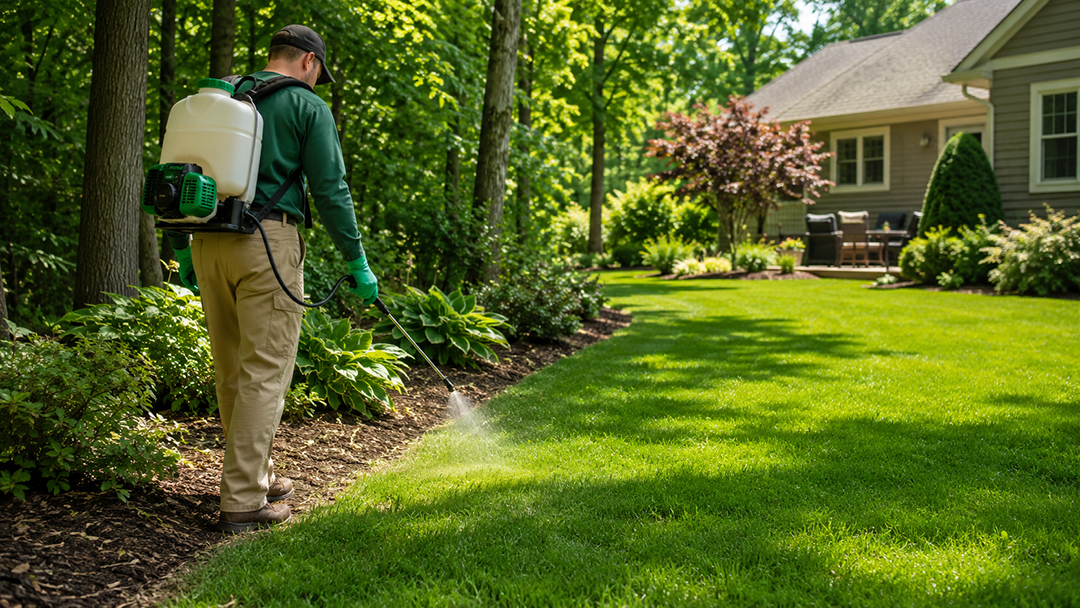
Professional lawn care or pest control services typically use EPA-registered insecticides designed to kill ticks on contact and provide residual control. These treatments are applied to:
Programs often include multiple applications throughout the season to maintain control, especially during peak activity periods.
Common Active Ingredients
Tick control products often include:
These products are typically applied as liquid sprays using backpack or truck-mounted sprayers, targeting areas where ticks are most likely to live.
Timing of Applications
Timing is critical for effective control. Treatments should begin:
Starting early helps prevent populations from becoming established.
Natural and Non-Chemical Tick Control Methods
While insecticides are highly effective, many homeowners prefer to combine them with natural or cultural practices to reduce tick habitat.
1. Lawn Maintenance
Keeping your lawn well-maintained is one of the simplest and most effective strategies:
Ticks thrive in shaded, humid environments, so increasing sunlight exposure helps reduce their survival.
2. Create a Tick Barrier
A physical barrier can significantly reduce tick migration into your yard:
Ticks avoid dry, exposed areas, making these barriers highly effective.
3. Reduce Wildlife Activity
Ticks rely on hosts like deer and rodents to survive and spread. To minimize their presence:
Limiting wildlife access can dramatically reduce tick populations.
4. Use Tick-Repelling Plants
Some plants may help deter ticks when used strategically in landscape beds:
While not a standalone solution, they can complement other control methods.
5. Personal Protection Measures
Even with yard treatments, personal protection is essential:
Integrated Tick Management: The Best Approach
The most effective tick control strategy is a combination of methods, often referred to as Integrated Pest Management (IPM). This approach includes:
By combining these techniques, homeowners can significantly reduce tick populations and minimize the risk of exposure.
Final Thoughts
Tick activity in Southeast Michigan is on the rise, and it’s no longer just a concern for hikers or rural residents. Ticks are now a common issue in residential neighborhoods, making proactive prevention more important than ever.
Starting early in the season, maintaining your yard, and using targeted insecticide treatments can dramatically reduce tick populations. When paired with smart landscaping and personal protection, these strategies allow you to enjoy your outdoor space with confidence.
If you’re a homeowner in Southeast Michigan, the key takeaway is simple: don’t wait until you see ticks—prevent them before they become a problem.